
THANK YOU FOR SUBSCRIBING
× 
Food and Beverage Tech Review Weekly Brief
Be first to read the latest tech news, Industry Leader's Insights, and CIO interviews of medium and large enterprises exclusively from Food and Beverage Tech Review

Community Coffee
Heather Michelli Jones, Senior Manager of Quality Assurance and Continuous Improvement
Building a Culture of Food Safety, Quality, and Continuous Improvement from Bean to Cup
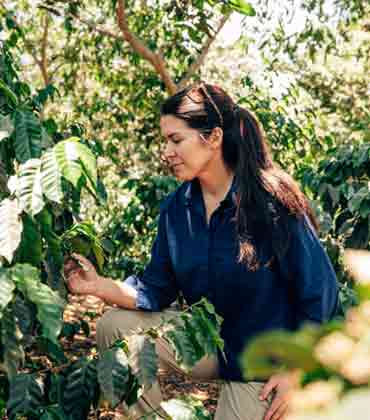
Heather Michelli Jones
Every quality professional memorizes the rulebook first: the regulations, the eCFR, the patchwork of state guidelines governing how products are made, labeled, and sold. Those rules matter enormously; they are why a consumer trusts what sits on the shelf. But after years of leading quality across our plants, sales locations, and comanufactured brands, I believe compliance is the starting point, not the standard you aim for. A strong culture never settles there; it strives to rise well above it. When you stack improvements above compliance, you close in on where real quality lives. You cannot audit or mandate your way there. Once the process is stable, the real work of continuous improvement begins. Your focus turns to relentlessly working to narrow variation around the target so every unit moves closer to the intended value rather than simply staying inside specification limits. You build a culture that lives and breathes those expectations across every employee and the result is operational excellence.
What the cupping table taught me I hold a Q-Grader Arabica certification: I am trained to grade coffee the way a sommelier evaluates wine. You score flavor, aftertaste, aroma, acidity, body, and balance against a defined standard, and what that discipline teaches you is calibration. Two graders half a world apart should taste the same coffee and land on the same score, because they trained their senses against a shared reference. Food safety works the same way: shared standards enable an entire organization to calibrate to the same level. Knowing what a defect looks like and what score to assign is fundamental. But when you taste a truly beautiful cup, one with complexity, balance, and sweetness - a cup that hits it out of the park - you develop a keen respect for what lies beyond the standard. Just as the best farmers strive for excellence, we should strive for more than simply meeting a target. True quality means understanding and controlling the process and variations to deliver the desired result consistently. That is the difference between being “within spec” and owning a process. Culture decides your limitations When quality is treated as a compliance function that stands between the work and the shipment, checking boxes and making pass-or-fail decisions, you will never achieve operational excellence. That framing caps what a team can contribute, defining it by what it prevents rather than what it enables. A true quality organization makes the enterprise faster and gives employees at all levels confidence in their daily work. When a plant team knows the standard - for example, when an operator feels ownership of the outcome rather than fear of the audit - decisions are executed correctly at the source. The result is fewer holds, fewer surprises, and a brand that can expand into new products and sites without diluting what made it trusted. “True quality means understanding and controlling the process and variations to deliver the desired result consistently.” That is why continuous improvement (CI) is a culture you never stop building, not a toolkit you shelve until needed. Root cause analysis and standard work are only as strong as the people willing to use them when no one is watching. The real work of an enterprise CI program is not the methodology. It is giving teams the training, the language, and the permission to solve problems themselves, and then getting out of their way. Your bench is the secret super power None of this travels without people to carry it. The most durable thing a quality and CI strategy can build is not a document or a system. It is bench strength: a pipeline of talent, developed deliberately to carry the standard the way a trained grader carries a calibrated palate. Systems set the standard. People are what make a successful culture. I think of these individuals as ambassadors of quality, food safety, and CI. An ambassador is the operator who stops a line because something felt off, the production supervisor who coaches a new hire on why a step matters, the quality assurance supervisor who runs a corrective action meeting the same way regardless of who is in the room. Seed those people across plants, affiliated products, and new sites, and the culture stops depending on any single leader. It becomes self-sustaining, which is the only way it survives growth. Build your bench intentionally, calibrate them to YOUR standard, and you gain something no audit can give you: change agents already standing in the rooms where decisions get made, driving the culture in every corner of the business. The translator One of the most useful things a modern quality leader does is translation. We stand between the enterprise, the regulators, and the auditors, each speaking a different language. The operator cares about the line running, the regulator about the CFR, leadership about growth and risk, and the auditor about adherence to your processes. Quality and Compliance Leaders hold these priorities together and turn it into one way of operating that speaks to each party. It is again a story of calibration, but across people and processes. I think of quality and continuous improvement as what lets the company keep its promise. The promise on the label, the promise of the brand, the promise that the cup a customer pours tomorrow will taste like the one they trusted yesterday. Compliance will always be where we start. It is simply not where we should ever stop.The articles from these contributors are based on their personal expertise and viewpoints, and do not necessarily reflect the opinions of their employers or affiliated organizations.
Top
