THANK YOU FOR SUBSCRIBING
× 
Food and Beverage Tech Review Weekly Brief
Be first to read the latest tech news, Industry Leader's Insights, and CIO interviews of medium and large enterprises exclusively from Food and Beverage Tech Review
Food and Beverages Tech Review: Specials Magazine
Neogen [NASDAQ:NEOG]
Making Every Dairy Safety Test Count
A tanker of raw milk arriving at a dairy processing plant represents more than an incoming delivery. Before accepting it for production, quality teams must determine whether the milk meets established safety standards. Once processing begins, sanitation checks and microbiological testing become essential to keeping production on track. Each result informs a decision about whether material can enter production, equipment is ready for use and finished products meet the necessary requirements. The speed and reliability of those decisions directly influence how a dairy plant manages its production schedule. Neogen [NASDAQ:NEOG] supports food safety at different stages of dairy production through a range of testing technologies. Its portfolio covers milk residue detection, sanitation verification and microbial analysis, while its Neogen Analytics platform helps manufacturers organize testing information and respond to identified risks. Rather than approaching food safety as a single inspection before product release, Neogen provides tools that help quality assurance teams check conditions throughout production and act on test results before problems affect the process. Evaluating Milk Before Processing Begins Incoming milk testing establishes an important control point before raw materials enter a dairy processing operation. Antibiotic residues and contaminants such as aflatoxin M1 require different detection methods, making test selection dependent on the specific hazard being assessed. Neogen provides dedicated solutions that help dairy processors check incoming milk against safety requirements before accepting it for production.
Food Service Equipment
Twin screw pumps have long been the workhorse of fluid handling in upstream oil and gas, valued for their ability to manage everything from low-viscosity condensates to high-viscosity crude and multiphase flows with entrained gas. Their appeal was simple; uninterrupted throughput, no matter the process condition It was this consistency that caught the attention of Axiflow Technologies’ founders. But they saw something more; a broader cross-industry application hiding in plain sight. At the time, food and pharmaceutical manufacturers were struggling with a longstanding bottleneck. Running a viscous product like a sauce or a nutraceutical paste required one pump. Cleaning the line meant switching to another pump system or disassembling the existing one. Downtime was accepted as a trade-off for sanitation, even if it meant higher labor costs and greater contamination risk. In 2008, at a time when sanitary twin screw technology was virtually unknown in North America, Axiflow introduced a hygienic platform that could handle both product and cleaning media alike without switchovers or teardowns. Suddenly, production lines ran longer, cleaning cycles were shortened and uptime became the norm. The Axiflow STS Series made this shift possible. With nothing more than a change in pump speed, processors could easily switch from handling high-solids products to cleaning solutions. “When we translated it to the food industry, we saw real value in changing how customers processed,” says George Doan, product manager. “They no longer had to take equipment apart to clean it or run separate systems for cleaning and production.” To coin a phrase from Axiflow’s owner, “It was like going from a flip phone to an iPhone. Once they saw what it could do, there was no going back.” The Real Workhorse Inside the Line The Axiflow STS Series features a dual-screw geometry and axial flow design, enabling precise handling across a wide viscosity spectrum. Engineered from precision-machined 316L stainless steel and certified by both 3-A and EHEDG, the STS Series is purpose-built for hygienic environments where compliance, performance and uptime are non-negotiable. With flow capacities up to 2,500 GPM, pressure ratings reaching 725 PSI and temperature tolerances exceeding 425°F, it handles everything from melted cheese to thick smoothies with ease. A simple speed adjustment allows the pump to transition seamlessly from product transfer to clean-in-place, eliminating the need for disassembly, hardware changes or additional equipment. It also integrates effortlessly into Axiflow’s broader systems, pairing with mixers, auger feeds or turnkey blending solutions. “The twin screw pump lets our client partners stop choosing between flexibility and efficiency,” says Doan. “Now, they get both in one system.”

Food Supply Chain

McGowan Rice approaches produce storage from the product outward. Before determining what a facility should look like, the company examines what will be stored, how the producer handles it and how the building must connect with the wider operation. Its temperature-controlled facilities are designed around product preservation, food safety and each customer's operations. “Our goal is to build a facility for their product more than just sell a construction project,” says Mark Rice, President, McGowan Rice. Storage Designed Around the Product The process starts with the produce. McGowan Rice considers whether a customer handles potatoes, onions, leafy greens, fruits or other products, then examines how the produce is stored, including whether it moves in bulk or in bins. The team also looks at storage capacity, loading and unloading requirements and how the facility connects with packing operations.
Contract Manufacturing
As food brands move from early production to larger-scale manufacturing, production becomes a test of more than capacity. Products must retain their quality, safety and market claims as volumes, formats and supply chains change. ZoRoCo Packaging supports brands through this transition with a partnership-driven manufacturing model. The family-owned food contract manufacturer and co-packer works with emerging brands as well as multinational companies across frozen, gluten-free and free-from categories. As clients’ products and volumes grow, the team works with them to manage changing production requirements and build the capabilities needed to support their growth. ZoRoCo sees clients’ success as its own, making their growth an important part of its own success. “If we can partner with our clients and help them put successful, competitive products in the market, they’ll grow, and that will allow us to grow,” says Cordy Rost, founder and president.

Food Processing

Pre-Harvest Assessment: Elevating field practices for a safer produce industry
Takashi Nakamura, VP Food Safety, Fresh Del Monte [NYSE: FDP]
Food Service Equipment

Leading Food Safety Through Standards And Strategy
Michael Coley, Food Safety & Quality Manager, Symrise AG
Food Safety

Owning Safety: A Shift from Rules to Responsibility
Ray Mcguire, CSP, Senior Director, Safety, Fairlife, LLC
Contract Manufacturing
Adaptability In Contract Manufacturing
Rick Alden, Sr. Director Procurement Operations, Ajinomoto Foods North America
Contract Manufacturing

Finding Success With Limited Resources (Procurement / Replenishment)
James Gouin, Director of Procurement and Supply Chain, Häns Kissle

IN MY OPINION
Beverage Quality Management
EHS Leadership that Support Production
Thalia Vasquez, Ehs Director, Quality Sausage Company

LAST WORD
Food Tech
Creating a Food Safety Culture That Lives Beyond the Audit
Dante Betancourt, FSQA & Sustainability Director, Galdisa
IN FOCUS
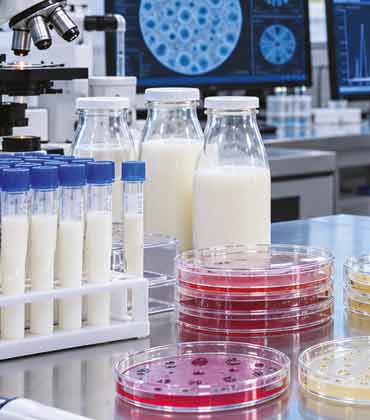
Strengthening Dairy Food Safety through Operational Excellence
Dairy food safety improves through preventive controls, digital monitoring, traceability, employee training, and consistent quality management.

Food Produce Storage Systems: Enhancing Freshness and Sustainable Supply
Advanced food produce storage systems preserve freshness, reduce waste, improve supply chain efficiency, and support sustainable food security.
EDITORIAL
Rethinking Food Quality at Every Stage
A food product’s safety depends on decisions made long before it reaches the consumer. From the conditions in which produce is grown to the facilities where it is stored, processed and packaged, each stage carries responsibilities that cannot be treated in isolation. This edition of Food and Beverage Tech Review examines how companies and industry leaders are addressing those responsibilities through practical safeguards, specialized capabilities and stronger operating discipline.
Leading the issue is Neogen [NASDAQ:NEOG] which is the winner of Top Dairy Food Safety Solutions 2026. Its emphasis on the testing and safety of dairy food shows the significance of risk identification and control in the process of food manufacturing.
The featured companies approach that responsibility from different points in the supply chain. McGowan Rice, named Top Food Produce Storage System 2026, designs temperature-controlled facilities around the produce being stored, accounting for refrigeration, airflow, humidity, sanitation and handling requirements. The objective is to preserve product quality while accommodating the realities of each customer’s operation. ZoRoCo Packaging, recognized as Top Food Contract Manufacturing and Co-Packing Services 2026, works with food brands as their production needs evolve. Its specialized facilities, coordinated production processes and emphasis on client communication help businesses manage changing volumes and product requirements without losing sight of quality and reliability.
The issue’s contributors bring the discussion back to the people and systems responsible for making food safety work. Takashi Nakamura, Vice President at Fresh Del Monte, describes the importance of grower audits, safe water practices, sanitized harvesting equipment and regular employee training across a global supply chain. Michael Coley, Food Safety and Quality Manager at Symrise AG, emphasizes consistent protocols across facilities, improved digital traceability and a compliance culture that keeps pace with changing regulations.
Their perspectives point to a shared lesson: food safety is built through daily decisions, not a single inspection or test. Explore this edition to see how companies and leaders are putting that principle into practice across the food and beverage sector.
Top
