
THANK YOU FOR SUBSCRIBING
× 
Food and Beverage Tech Review Weekly Brief
Be first to read the latest tech news, Industry Leader's Insights, and CIO interviews of medium and large enterprises exclusively from Food and Beverage Tech Review
Food and Beverages Tech Review: Specials Magazine

Does innovation always mean adding more to a product, or can the smarter move be removing what makes it harder to use? Gycor International has spent four decades answering that question through cooking-oil filtration. Its approach is rooted in simplification—refining the filtration process so restaurants can achieve greater consistency without adding complexity to daily kitchen operations. That approach traces back to 1986, when Gycor began selling bulk filter powder for commercial fryers. The powder worked, but its application could vary dramatically from one shift to the next.
Top Food Processing Product Recovery System 2026
The tank may be empty, but the line leading away from it is not. In food processing, that can mean a surprising amount of usable product is left behind after a production run. Consider a yogurt plant with a 30,000-gallon tank feeding a filling machine. Once the tank has been emptied, yogurt still occupies the pipeline. Before modern clean-in-place practices became standard, manufacturers often flushed such lines with water or dismantled them for cleaning. Neither approach did much to recover the product itself. Laufer Valve Technology addresses that gap with its LIAG® DMV pigging system. A pig is sent through the line to push the remaining product out before cleaning starts. The system can remove about 99 percent of the product left in the pipeline, depending on the application..

Food Pathogen Testing System

Test and Release food safety testing has been an elusive challenge for the food production industry. For decades, the industry has relied heavily on third-party laboratories to generate pathogen tests days after production is ready to ship to buyers, which means food samples often leave the production floor and travel miles before testing even begins. The industry has long needed a cheap, easy to use and totally flawless “Test and Release” solution to the food safety issue now AME Certified Laboratories has released the ideal system. By the time results come back, the food may already be sitting in expensive to maintain cold storage facilities, losing freshness and shelf life, or moving closer to distribution without clear confirmation of safety. The problem is not just the waiting. Many third-party labs still depend on outdated culture-based methods that can take several days to produce test results and do not always deliver consistent accuracy. Even when the traditional methods are established, logistical issues such as sample handling and accessioning create opportunities for error. Accessioning involves receiving, labeling, and sorting hundreds of samples at once. This is the gap that AME Certified Laboratories set out to close. Instead of leaving such a critical step to outside parties, AME equips food processors with in-house cutting-edge DNA-based Polymerase Chain Reaction (PCR) testing systems that can be used directly in their own facilities with their own employees. AME, equips, trains, supports, provides the test kits, and certifies the in-house employees. Trained employees report their increased capability after being certified to be AME PCR Technicians, increased their value to the food production organization. By giving food manufacturers, the most advanced tools to conduct tests themselves, the company eliminates the time lag, reduces the risk of error, and dramatically improves outcomes. Food processors gain control over one of the most sensitive points in the supply chain, with results available in minutes rather than days with ISO 17025-level systems and train. Unlike traditional third-party testing, where food samples are sent out and results can take days to arrive, AME's in-house PCR testing returns results in as few as 20 minutes of run time. That is a game-changer for food producers, especially for items with short shelf lives, such as fresh produce. This immediate feedback allows them to address contamination concerns quickly without waiting for outside labs. In fact, AME’s system is so efficient that it reduces the need for costly cold storage while products are awaiting test results, thus the “Test and Release” method realized. Food producers report the ‘no down time’ associated with waiting for test results a big advantage in the shipment of products to buyers. An AME client noted, "The most desirable and advantageous use of the machine is, it is operated by the QA staff and results are kept in-house for analytical results before the product is packed and shipped." Andy Moreno, Ph.D., Bacterial Surveillance Systems Engineer and Genetic Detection Systems Engineer at AME, emphasizes the importance of in-house testing. He says, “The big advantage of in-house testing is that the people doing the testing are the same ones who know the factory, the processes, and the products. They conduct it with an understanding of what is happening at every step. That leads to much more accurate and reliable results at a fraction of the traditional cost model.”
CXO INSIGHTS

From Roadmap to Reality: Scaling Technology with Purpose
Cameron Fiorini, Vice President of Digital & Technology, Foxtail Coffee CO

The Role of Quality Leaders In Creating Safer and More Efficient Food Manufacturing Processes
Ernell Hartwell, Corporate (HQ) Quality Assurance Manager, Call Your Mother

Today's Sustainability - Responsibility, Regulation and Reality
Jeff Partridge, Environmental, Health, Safety, and Sustainability Director, Catania Oils

Food Safety Auditing: What are the Actual Gains?
Gina M. Cullerton, Fsqa Manager, Clemens Food Group
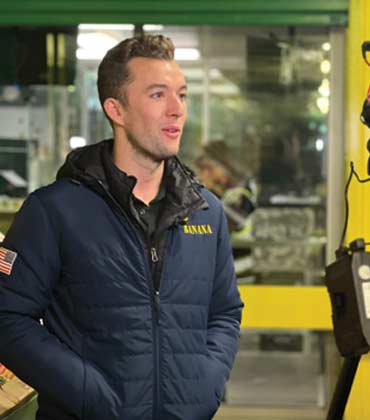
The Clock is Always Running: How Operational Precision Became Our Answer to Food Waste
Daniel J. Barabino, Chief Operating Officer, Top Banana


IN FOCUS
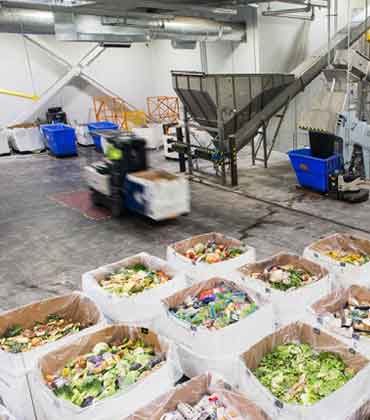
Cooking Oil Management: Improving Filtration and Frying Process Efficiency
Cooking oil filtration improves frying consistency, extends usable oil life, supports safer handling, reduces waste and strengthens efficiency across foodservice operations.
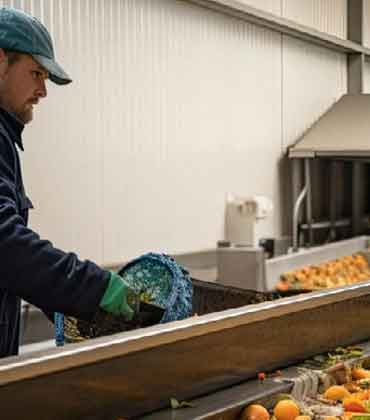
Recovering More Value from Food Processing Operations
Food processing businesses emphasize efficiency in their operations without compromising the quality of products, compliance with regulations, and financial performance.
EDITORIAL
Operations and Maintenance Strengthening Food Safety
Food manufacturing is entering a period where efficiency, product quality, sustainability and responsible resource management increasingly shape competitive performance. In this edition of Food and Beverage Tech Review, we recognize organizations and industry leaders advancing food processing through practical innovation, process improvement and stronger collaboration.
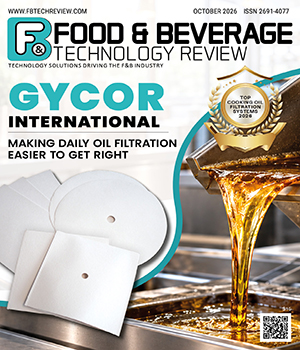
Our cover story celebrates Gycor International, recognized as the Top Cooking Oil Filtration Systems 2026, for simplifying commercial fryer filtration while helping operators improve oil quality and reduce waste. Its Filter Power Pad integrates filtration media and treatment powder into a single-use solution, making daily filtration easier to standardize. By focusing on adsorption, Gycor helps retain more usable oil while removing impurities, supporting consistent food quality and potential cost savings.
This edition also features Laufer Valve Technology / LIAG®, recognized as the Top Food Processing Product Recovery System 2026, for its LIAG® DMV pigging technology. The system can recover approximately 99 percent of residual product from process lines, helping food manufacturers reduce product loss while supporting more efficient cleaning and resource use. Its application-focused engineering approach enables integration with existing plant infrastructure and automation requirements.
Leaders from the industry also provide valuable perspectives on the wider food manufacturing landscape. Gina M. Cullerton, FSQA Manager, Clemens Food Group, examines the relationship between operations, maintenance and food safety, emphasizing communication, expertise and decisive leadership as foundations for reliable plant performance. Jeff Partridge, Environmental, Health, Safety and Sustainability Director, Catania Oils, explores how sustainability intersects with regulation, packaging engineering, recycling, supply chains and manufacturing economics.
Together, these perspectives demonstrate how food and beverage organizations can strengthen performance by simplifying processes, recovering valuable resources, fostering collaboration and approaching sustainability through practical business decisions.
Top
